
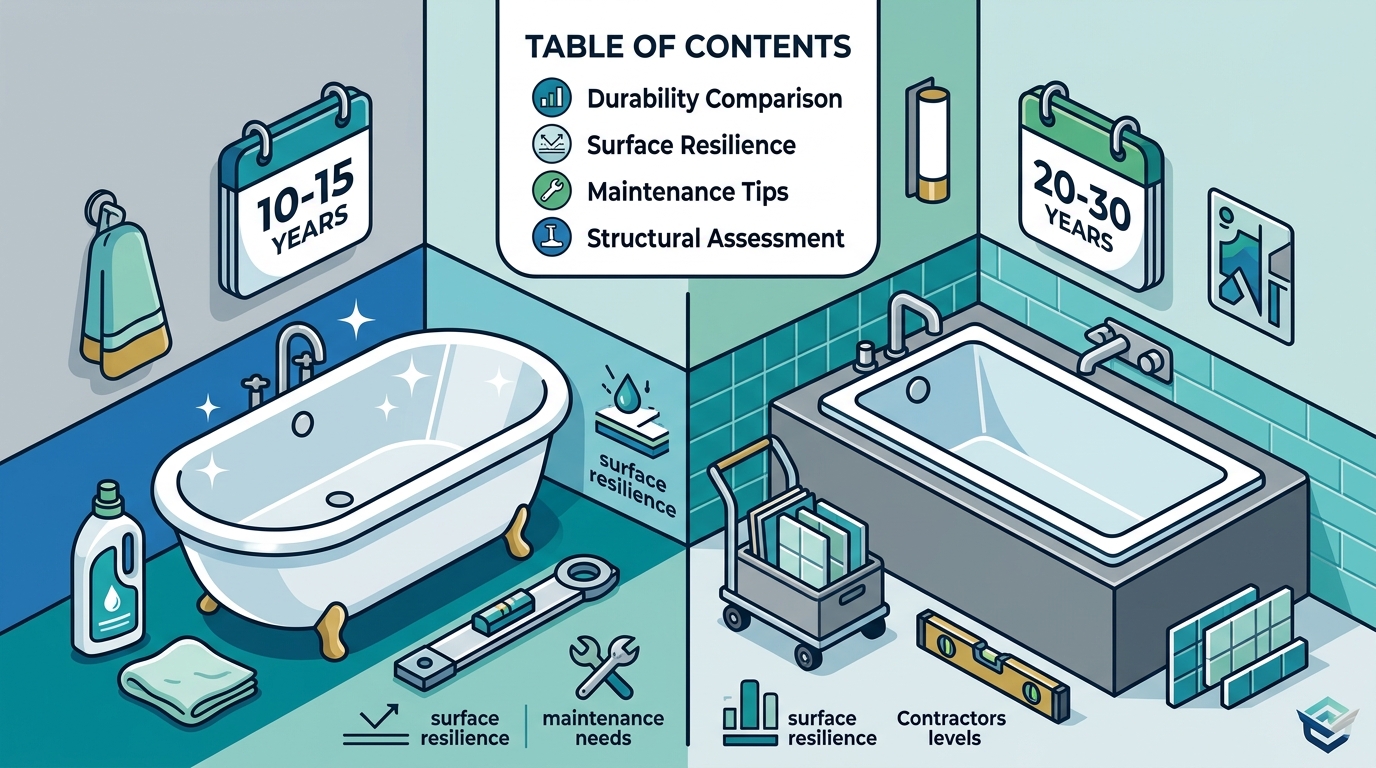
Professional reglazing typically extends the life of a tub by 10 to 15 years, while a new replacement unit lasts 20 to 30 years. This guide compares the long-term durability of these two options. It covers surface resilience, maintenance needs, and structural assessment to help you choose the best path for your bathroom.
Reglazing Lifespan
Reglazing is a surface restoration process that applies a new coating to an existing fixture. When performed by a professional, this process can significantly extend the usable life of your bathtub or shower. Industry data suggests that a properly applied reglaze can last between 10 and 15 years. This longevity depends heavily on the quality of the initial surface preparation and the specific coating technology used.
Factors Influencing Longevity
The lifespan of a reglazed surface is not static. It is influenced by the frequency of use, the type of cleaning agents applied, and the condition of the underlying material. A tub that is structurally sound but cosmetically worn will generally support a longer-lasting finish than one with minor structural flexing. Porcelain bathtub reglazing often yields the most durable results because the base material is non-porous and rigid. Fiberglass surfaces, while lighter, may require more careful maintenance to achieve the same lifespan.
The Role of Professional Application
DIY kits often fail prematurely because they lack the industrial-grade primers and curing environments of professional services. Excellence Reglazing utilizes a rigorous protocol that includes deep cleaning, chemical etching, and specialized primers. This professional approach ensures that the new coating bonds at a molecular level, creating a finish that resists peeling and chipping for over a decade.
Replacement Lifespan
Replacing a bathtub involves installing a brand new unit, which typically offers a lifespan of 20 to 30 years. This option provides a fresh start for the fixture, eliminating any existing wear or damage. However, the lifespan of a new tub is also subject to the quality of the material and the installation process. Acrylic and fiberglass tubs are common choices, each with its own durability profile.
Material Specifics
Acrylic tubs are known for their smooth finish and ease of cleaning, but they can be more susceptible to scratching than porcelain. Fiberglass tubs are lightweight and affordable but may yellow or fade over time. Porcelain enamel tubs are the most durable in terms of surface resistance but are heavier and more expensive to install. Understanding these material differences is crucial for predicting the long-term value of a replacement.
Installation Impact
The durability of a replacement tub is also tied to the quality of the installation. Improper support or leveling can lead to stress fractures or leaks over time. A professional installation ensures that the new unit is securely anchored and properly sealed, maximizing its potential lifespan. This is a significant consideration when comparing the total cost and effort of replacement versus reglazing.
Surface Durability Differences
Surface durability refers to the ability of a finish to resist physical and chemical damage. Reglazed surfaces and new replacement surfaces differ in their resistance to scratches, stains, and impact. A professional reglaze creates a high-gloss, non-porous finish that is highly resistant to staining and easy to clean. This finish is designed to withstand daily use and resist the effects of hard water and soap scum.
Scratch and Impact Resistance
Chemical Resistance
Both reglazed and new surfaces must resist common household chemicals. However, the chemical composition of the reglaze coating is specifically formulated to bond with the existing material. This ensures that the finish remains intact even when exposed to mild cleaning agents. It is important to avoid abrasive or acidic cleaners on any refinished surface to maintain its durability.
Maintenance Requirements
Maintenance is a critical factor in determining the long-term durability of any bathroom fixture. Reglazed surfaces require specific care to preserve their finish and extend their lifespan. Using non-abrasive cleaners and soft cloths is essential to prevent scratching the new coating. Avoiding harsh chemicals and abrasive pads will help maintain the high-gloss appearance and protective properties of the reglaze.
Care for Reglazed Surfaces
Regular cleaning with a mild, pH-neutral cleaner is recommended for reglazed tubs and showers. This helps remove soap residue and mineral buildup before they can etch into the surface. It is also important to ensure that the tub is not exposed to extreme temperature changes, as this can cause the coating to expand and contract, potentially leading to cracks. Following these simple maintenance steps can help a reglazed surface last for many years.
Care for Replacement Surfaces
New replacement tubs generally require less specific maintenance than reglazed surfaces. However, they still need regular cleaning to prevent the buildup of soap scum and mold. Acrylic and fiberglass tubs should be cleaned with non-abrasive products to avoid scratching. Porcelain tubs are more durable and can withstand a wider range of cleaning agents. Proper maintenance of any new fixture will help ensure that it looks and functions well for decades.
Structural Integrity Assessment
Before choosing between reglazing and replacement, it is essential to assess the structural integrity of the existing fixture. A tub that is cracked, flexing, or leaking may not be a good candidate for reglazing. In such cases, replacement is the only viable option. A professional assessment can determine whether the underlying structure is sound enough to support a new coating.
Identifying Structural Issues
Signs of structural damage include visible cracks, flexing when weight is applied, and water leaks. Fiberglass crack repair can address some of these issues, but severe damage may require full replacement. If the tub is flexing, it may need additional support underneath to stabilize it before reglazing. This step is crucial for ensuring that the new finish does not crack or peel over time.
When to Choose Replacement
If the structural integrity of the tub is compromised, replacement is the best option. This is particularly true for tubs with extensive cracking or water damage that has affected the surrounding walls or floor. A new tub will provide a fresh, durable surface and eliminate any underlying structural concerns. Consulting with a professional can help you make an informed decision based on the specific condition of your fixture.
Durability Comparison Table
| Feature | Reglazing | Replacement |
|---|---|---|
| Typical Lifespan | 10-15 years | 20-30 years |
| Surface Durability | High resistance to stains and scratches | Varies by material (acrylic, fiberglass, porcelain) |
| Maintenance | Requires non-abrasive cleaners | Standard cleaning, less specific care |
| Structural Requirements | Must be structurally sound | New unit, no existing structural issues |
| Cost | Lower upfront cost | Higher upfront cost |
| Disruption | Minimal, no demolition | High, involves demolition and installation |
Key Takeaways
- Professional reglazing can extend the life of a tub by 10 to 15 years.
- New replacement tubs typically last 20 to 30 years.
- Reglazed surfaces offer high resistance to stains and scratches.
- Maintenance is crucial for preserving the durability of reglazed finishes.
- Structural integrity must be assessed before choosing reglazing.
- Replacement is the best option for tubs with significant structural damage.
- Reglazing is a cost-effective and less disruptive alternative to replacement.
- Professional application ensures a longer-lasting and more durable finish.
Frequently Asked Questions
How long does a reglazed tub last?
A professionally reglazed tub can last between 10 and 15 years, depending on the quality of the application and the level of maintenance.
Is reglazing as durable as a new tub?
While a new tub may last longer, a professional reglaze offers a highly durable finish that can withstand daily use for over a decade.
What maintenance is required for a reglazed surface?
Reglazed surfaces require the use of non-abrasive cleaners and soft cloths to prevent scratching and maintain the finish.
Can a cracked tub be reglazed?
Minor cracks can often be repaired before reglazing, but severe structural damage may require full replacement.
What is the best material for a new tub?
Porcelain enamel is the most durable, while acrylic and fiberglass are more affordable but may require more care.
How does reglazing compare in cost to replacement?
Reglazing is significantly less expensive than replacement, making it a cost-effective option for homeowners.
Conclusion
Choosing between reglazing and replacement depends on your budget, the condition of your current fixture, and your long-term goals. Reglazing offers a durable, cost-effective solution for structurally sound tubs, while replacement provides a fresh start with a longer potential lifespan. Excellence Reglazing can help you assess your specific situation and recommend the best option for your home. Contact us today for a free estimate and expert advice on restoring your bathroom surfaces.